Showing posts with label Gervase. Show all posts

Thursday, 14 August 2014

The break from Arrouaise: 1170-1188


Harrold Priory was originally founded as a 'daughter' house of the abbey of Arrouaise, near Calais in northern France.  From its foundation it appears to have been successful, attracting canons (priests), monks and nuns to its walls.  But a generation later its character had changed: Harrold appears now to be purely a nunnery with a prioress in charge, and it wanted its independence.  Following the death of Abbot Gervase the order had seemed to have lost control over its houses and was unsure of its direction.

The Arrouasian order resisted the call for autonomous houses but Harrold insisted that the distances involved made the control of their house from France impractical.  Other abbeys and nunneries in England in the 12th century argued the same, although many found little difficulty in being managed from a distance in this way.
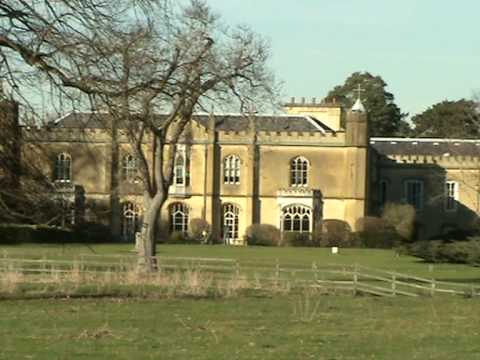
Missenden Abbey as it is today
A compromise solution was suggested, that the Bedfordshire priory should instead be governed by the Abbey of Great Missenden in Buckinghamshire (two days travelling away).  Harrold's prioress Gila undertook to gain the agreement of Arrouaise to this.  Details of this are recorded in the Great Missenden Cartulary (a collection of legal documents now in the British Library).  It was suggested that Harrold pay Arrouaise half a mark in rent to sweeten the arrangement.

Later, Abbot Walter of Arrouaise argued in the church courts that Missenden had obtained a forged charter from the Pope, and that any agreements made in respect of Harrold's changing status were null and void.  However, he maintains that Harrold should be subservient to Missenden.  Missenden, in turn, agreed to allow Harrold its independence in respect of a payment of half a mark - an agreement brokered by the bishop of Lincoln on 18 October 1188.

Thenceforth the Priory of Harrold came to be an independent house of nuns, living under the rule of St Augustine and answering to the Bishop of Lincoln.  The Augustinian rule was effectively no change for the nuns of Harrold - as Arrouasians they would have lived under it in any case.  The main change was that they were now effectively self-governed, something that would persist until the dissolution in the 16th century.

Some of the buildings of Great Missenden Abbey survive to this day: the site is currently owned by Buckingham New University and is run as a conference centre.


Sources:

The Cartulary of Missenden Abbey
Thompson, Sally (1991), Women religious: The founding of English nunneries after the Norman Conquest, Oxford: Clarendon Press

Venarde, Bruce L. (1997), Women's monasticism and medieval society: nunneries in France and England, 890-1215, Ithaca: Cornell University Press


Men or women? Priests, nuns and monks at Harrold


At the time of the forced closure of Harrold Priory (1536), it was was an all-woman community headed by a prioress. However, this was not the case in its early days. The documents relating to the foundation mention only 'canons', lay priests rather than monks and make no reference to women.  These men would have been responsible for the religious life of Harrold, centering on St Peter's Church.  According to the chronicles it was Hilbert Pelice, one of founder Samson le Fort's kinsmen, who persuaded him to found the priory, and who was early on given care of the church and new community.
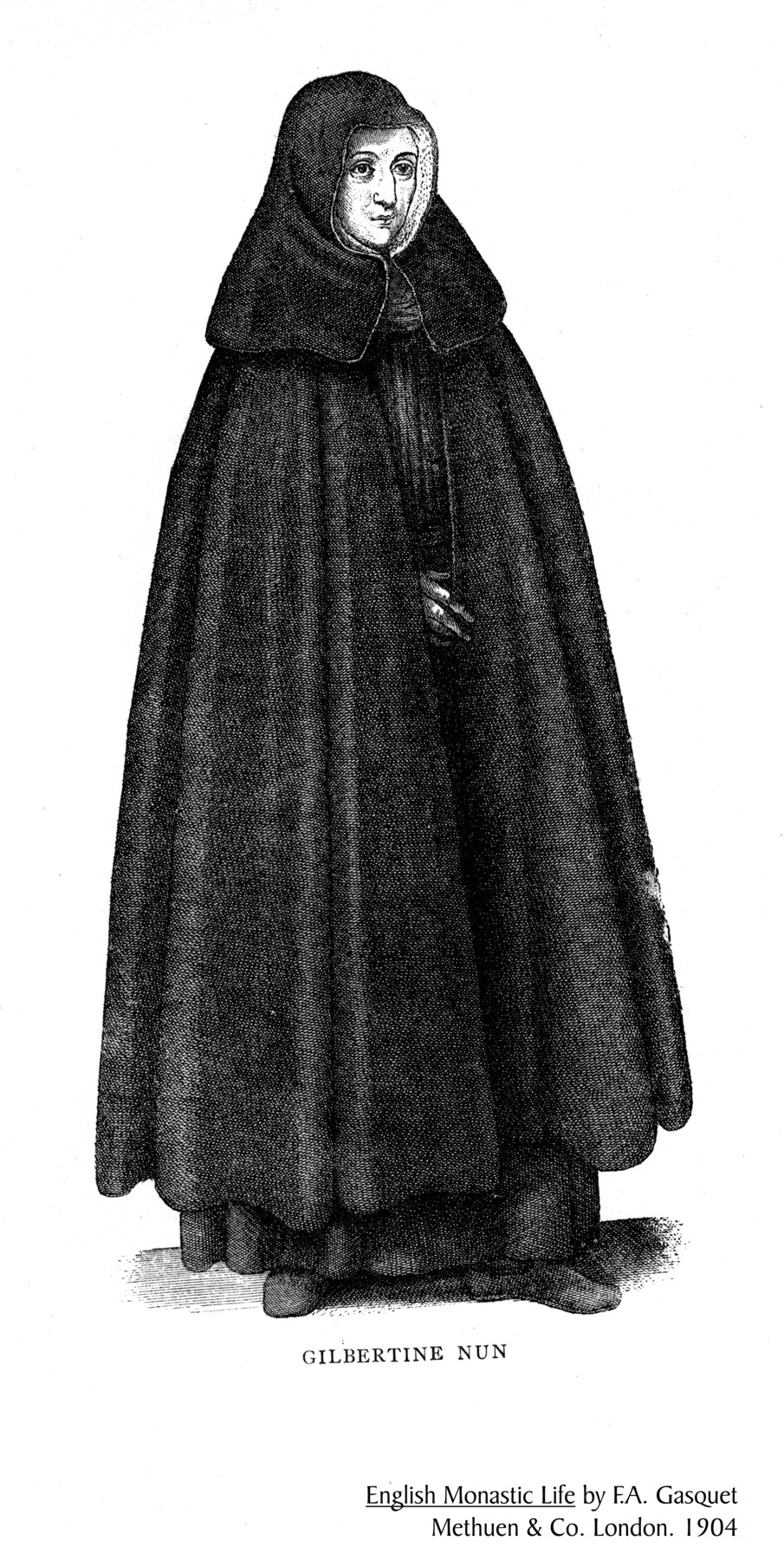
A Gilbertine nun
Source: www.historyfish.net

The first prior, Guy, may have been brother to Abbot Gervase of Arrouaise, and he seems to have set up house with a monk referred to as 'B' in the chronicles.  The burgeoning community appears several times in historical documents in its first 30 years or so, where there are references to lay priests (canons), to brothers and to sisters (monks and nuns).  The names of two French nuns in Harrold, Jelita and Gila, appear early on, although it is made clear that the women's role is subservient to the men in the community.  It is not known if they were nuns (ordained) or lay sisters, although both went on in later years to become prioress at Harrold, so presumably would have become ordained.

By about 1188, though, when Harrold was fighting Arrouaise for its independence, the references are to the nuns of the community: canons and monks are no longer in the picture.  A mixed community would have been unusual, but by no means unique.  Indeed, Chicksands Priory which was both close by and a contemporary of Harrold, housed monks and nuns right up to the dissolution.  Chicksands was part of the Gilbertine order with many houses across England and Wales, mostly mixed sex.

The Arrouasian order, by contrast, all but disappeared in the later middle ages, and seems to have tolerated mixed houses at the time of Gervase.  The norm in religious life, though, was for strict segregation: it was felt that by having men and women together it created distractions which would impact poorly on contemplation and prayer.  Mixed sex communities also had the potential for scandal: it was reported that a Gilbertine nun at Watton in East Yorkshire in the mid 12th century was made pregnant by one of the community's lay brothers.
Porch at nearby Oakley church: the priest(s)
would originally live in the room above

In Harrold, meanwhile, the canons serving the churches of St Peters and the smaller church at Brayfield, seem to have moved out some time before 1188.  Often the priests would have been housed in a room over the church porch, but in Harrold there is no evidence of this as no porch survives.  There was a small thatched house which in the later middle ages came to be known as the vicarage, and which remains to this day in Church Walk.  This only starts to appear in the records in the 17th century, after the Priory had been dissolved.


Sources
  • Thompson, Sally (1991), Women religious: The founding of English nunneries after the Norman Conquest, Oxford: Clarendon Press
  • Venarde, Bruce L. (1997), Women's monasticism and medieval society: nunneries in France and England, 890-1215, Ithaca: Cornell University Press

Wednesday, 13 August 2014

Altruism and self-interest


Why did Samson le Fort (or Samson Fortis as he is sometimes known) decide to establish a religious community in Harrold?  And why an Arouasian house?  As we know almost nothing about Samson we can only speculate.

There were many motivations for this type of  decision.   It cannot have been taken lightly: Samson gave up some significant personal wealth - enough to build a large house and to support a sizeable community of religious men and women, plus their servants.

Glastonbury Abbey as it might have been:
source www.photosofchurches.com
Probably the single most important reason would have been spiritual.   By establishing Harrold Priory Samson would have been investing in his afterlife.  As founder and benefactor the priests of Harrold (it was originally priests and nuns) would have been contracyed to pray for Samson's soul after his death: generally the founder would have a daily mass said for his benefit each day as well as having other prayers offered up for his soul. He may originally have had a special chapel built for this purpose in Harrold church.  Monasteries such as Glastonbury had packages available for benefactors: the more you gave, the more they prayed. It may be that Samson himself was buried in St Peter's, Harrold.

Another common reason for founding a religious community was as a result of a 'deal' with God. In this scenario the benefactor would be in a situation where he or she felt his life was in mortal danger. In this time of stress they would vow to do something amazing if only God (or a saint) would intervene and save their lives.  Common times for such vows were wars, sickness and travel.

Samson would have been required to provide military assistance to his king, Henry I, but in the years leading up to the foundation of Harrold Priory the realm was relatively peaceful.   After Henry's death,  by contrast,  the country descended into 20 years of civil war, but that's another story).  It  could simply have been a travelling drama: Samson would have had to move between his estates in England and those in Normandy: perhaps on one of these trips his ship got into difficulties and Samson 'did a deal' with God: save my life and I will found a monastery?  Some monasteries and nunneries were founded when their patrons set off for one of the Crusades: in this case, though, the First Crusade was over several years previously, and it would be another  few years before the next got underway.

Such a scenario is not so far fetched,  and this type of  vow was commonplace even at the end of the 19th century.   The endowment of Waterford church in Hertfordshire and its priceless collection of stained glass, was triggered by such a 'deal' when the wealthy benefactor was 'miraculously' cured of a terminal disease.  Medieval England, meanwhile,  was still affected by the White Ship tragedy of 1320 when 300 people,  including the heir to the throne and many leading nobles drowned in a simple accident off the coast of Normandy.

But why Arouaise?  The original 'mother' community seems to have been somewhere in the Pas de Calais region.  Perhaps Samson's ancestral lands were there?  Maybe he was merely seduced by the charms of Abbot Gervase?  The end result was that Harrold Priory was founded in 1336, as a daughter house of the Abbey of Arouaise.

Sources

Venarde, Bruce L. (1997), Women's monasticism and medieval society: nunneries in France and England, 890-1215, Ithaca: Cornell University Press


Tuesday, 12 August 2014

Foundation

Harrold Priory was founded sometime between 1136 and 1138.  There is no exact date available, and in any case it could often take years between a foundation being pledged and the community being give licence by the church and crown to open.

However, there were two key men involved in the foundation: Samson le Fort and Abbot Gervase.  Both of these men appear to be Norman French, part of the new ruling class in England in the 12th century.

We know little about Samson le Fort, although the likelihood is that he was a descendant of one of William I's retinue of knights who provided troops and support for his conquest of England in 1066.  He and his wife (Harrold's Albreda de Blosseville) were what historians such as Bruce Venarde would call 'minor nobility'. There is evidence of a le Fort family in Turvey at around this time - Turvey is just two villages away from Harrold, and connected by the old Roman road and the river Great Ouse.  Despite his 'minor' status, Samson le Fort appeared to be connected to Malcolm, king of Scotland, possibly via the Earl of Huntingdon, and Samson's grants were confirmed by these more powerful overlords.  There was a complex system of land holding at the time, and Malcolm's name crops up in the history of nearby Elstow Priory later in the middle ages.  Samson granted to the new monastic house the 'living' of St Peter's in Harrold and the living of the church at Brayfield, two villages upstream on the river Great Ouse.

The expectation at the time was that the people of a parish such as Harrold would donate 10% of their income to support the church - which could amount to a tidy sum.  In the case of a prosperous parish like St Peters this would grow and grow.  However, Brayfield never seemed to get past the early middle ages.

St Peter's church, Harrold
The other key figure in the foundation of Harrold was Abbot Gervase of Arouaise.  There is still some debate as to where Arouasise was: the consensus seems to be somewhere in northern France, in an area which was in the front lines during the Great War of 1914-18.  Gervase seems to have been a charismatic man, and traveled widely both in Normandy and England, founding religious houses under the Arouasian rule. Gervase seems to have persuaded Samson le Fort to finance Harrold Priory, as a 'daughter' house of Arouasie.  Gervase seems to have been able to put forward a relative, Guy de Arromanches, as the first prior.

In this way the priory was established in Harrold, linked spiritually and financially to the parish church of St Peter, a beautiful medieval church which remains to this day.

Sources

  • Venarde, Bruce L. (1997), Women's monasticism and medieval society: nunneries in France and England, 890-1215, Ithaca: Cornell University Press
  • Thompson, Sally (1991), Women religioius: The founding of English Nunneries after the Norman conquest, Oxford: Clarendon Press