Showing posts with label Augustinian. Show all posts

Tuesday, 2 September 2014

Poverty and the Rule of St Augustine


The community at Harrold was originally an Arroaisian house, a French order of priests and nuns who lived by the Rule of St Augustine.  A generation later Harrold was able to gain its independence from Arrouaise, and instead became subject to the Bishop of Lincoln.  However, it still continued to live by the Augustinian Rule, although by this stage there were only women in the community.

In practical terms this meant a life of poverty and charity.  Most of the nuns entering Harrold would have been from the higher levels of medieval society, the landowning elite.  Although some would have joined as young novices, many nuns would have been widows and would previously have enjoyed a privileged life style. Becoming a nun would have meant turning their backs on an active social life and instead embracing a life of contemplation and prayer.  Harrold's nuns would have had to give up their jewellery and fine clothes in favour of the plain habit of Augustinians.

Fish was a major part of the monastic diet
(source http://cookit.e2bn.org)
Meals were to be eaten without conversation, the only voice breaking the silence being one of the sisters reading from devotional books.  Even the meals would have seemed plain to many as the Rule encouraged moderation as well as regular fasting and abstinence.  Meat would have been rare, particularly in the winter months when the nuns would have subsisted mostly on vegetables and fish.  No meat would have been eaten during Lent (the 40 days leading up to Easter) and on Fridays.  Many monastic communities had fishponds which were stocked with carp and other fish, and the archaeological evidence of these is still visible.  In Harrold's case it is known that there were numerous fisheries close by in the Great Ouse.

Despite mostly being well-bred women from the upper levels of medieval society, most of the nuns of Harrold would have been involved in growing food for the community as well as preparing it.  They would have grown fruit and vegetables, kept chickens and bees and possibly other small livestock.  The nuns would also have brewed beer (this was safer to drink than water), being helped in all these tasks by (paid) lay servants (unpaid) lay sisters.  The nuns. when times were hard, may have resorted to spinning thread and even weaving their own cloth.

For the later years at Harrold, at least, poverty was a reality rather than just a virtue.  The nuns were rebuked during a visitation (inspection) by Bishop Alnwick of Lincoln in 1442-1443 as he found that they could only afford a 'common washerwoman' four times a year: he was scandalized that at other times they were forced to wash their own clothes on the bank of the river Great Ouse (Spear 2005).

The Rule of St Augustine allow some leniency in regard to diet and creature comforts.  The elderly and sick were provided with better food and more of it, and were permitted warm clothing.  This flexibility in the application of monastic rules probably allowed widows and other new entrants to places like Harrold Priory a lifestyle that was not as austere as one might imagine.  In the later middle ages it was often felt that this flexibility had turned to licence, and that monks and nuns were often leading lives of debauchery.  There is no evidence for this at Harrold although in 1442-1443 Prioress Dame Alice Decun complained to Bishop Alnwick that the nuns 'all wear their veils spread up to the top of their foreheads', and Hodges (2005) wonders if the Bishop was "being worn down by the collective disobedience of the nuns".  At nearby Elstow the Bishop of Lincoln was forced to remind the community of their duties in terms of meals, clothing and other comforts.

By avoiding the excesses of consumption - both food, clothes and other material goods - it was believed that religious communities could focus better on the contemplative life. But at Harrold poverty at times meant that the nuns had to forgo their spiritual duties, simply to be able to feed and clothe themselves.


Sources
  • Hodges, Laura Fulkerson (2005), Chaucer and clothing: Clerical and academic costume in the General Prologue to the Canterbury Tales, DS Brewer
  • Power, Eileen (2010), Medieval English Nunneries: C1275 to 1535, Cambridge University Press
  • Spear, Valerie (2005), Leadership in Medieval English Nunneries, Boydell Press.

Saturday, 23 August 2014

Daily life for the nuns of Harrold


Harrold Priory was a small community of nuns, probably never numbering more than 12 plus the prioress.  We know very little about them, as the few surviving records tend to be legal documents and rarely concern themselves with individuals and the everyday work of the Priory.  However, most orders of nuns, whether following the Rules of Benedict (as nearby Elstow did) or Augustine (as Harrold did), followed a similar routine.  Richard Chipchase has written the following general description of daily life, which would probably have applied to Harrold Priory in most respects:

"[The nuns] would rise at 2am for Matins Laud, the first service of the day. After this they would return to bed and rise again with the sun. At this point [they] would wash and have breakfast. Nuns usually drank beer with their meals due to it being cleaner than the water. At 7am they would go to Prime, the second service of the day. After this the nuns would meet in the chapter house where readings from the Bible would be heard [and the business of the day discussed]. The third service was Tierce at 9am and following this the nuns would occupy themselves with work in the convent until midday and the fourth service, Sext None. After this, they would eat before returning to their work until Vespers, the fifth service of the day which started at 5pm. This would be followed by a light supper and later the final service of the day, Compline, which took place at 7pm. The nuns went to bed after this, ready for the process to start again at two the next morning. This format varied through the different orders with some splitting Matins and Lauds, having an extra service at 5am. Others would split Sext None with a service at noon and another at 3pm."

Modern-day nuns at prayer: source Augustiniannuns.org
All of these services would be marked with the ringing of bells, and Harrold folk would in turn be measuring the day by reference to these.  The reports of local courts contain references to the time of day related to the hours of the office.  In a flat landscape like north Bedfordshire the sounds of the bells would carry great distances.  Today in Harrold the bells of St Peter's church still ring the hours and the quarter hours - but not the offices of the day.

Chipchase goes on:

"The nuns did various types of work while in the convent, they also received an education with many learning to read and write. Often, the convent was the only source of education for women during the middle ages. The nuns had also various tasks to do including washing and cooking, farming, brewing, bee-keeping, medical care, teaching, spinning, weaving and embroidery and illuminating manuscripts. It was usual for nuns from wealthy families to be given the lighter tasks and very often the convent had its own lay sisters who carried out a lot of the manual work. These were members of the convent who were not bound to the various services of the day. The nuns themselves had various roles within the convent, the head of which was the Abbess, a position which was for life. Other titles were the Almoner, any nun who dispensed alms to the sick and needy. Other roles were the Cellarer, who was basically the convent housekeeper and the Infirmarian who looked after the infirmary."

This latter point is important in Harrold, as the nuns cited the needs of the poor and travelers in appeals for charity right up to the late middle ages, stating that providing these was stretching the community's resources. But as Chipchase notes, the life of the nuns centred on the spiritual.  At Harrold the nuns would take part in the main sacraments (for example holy mass) through St Peter's church where they may have had an adjoining chapel, separated from the main congregation.  They also had their own chaplain who may have provided other sacraments (for example confession) in the Priory itself.  The daily services would probably have been held in the Priory, and nuns were put in charge of this, as Chipchase goes on to say:

The Sacrist was an educated nun who would be in charge of all books, vestments and vessels and was also a medieval property manager being responsible for maintenance. Finally, there was the Prioress. This role was taken by a senior nun and in an Abbey she was the Abbess’ deputy and in a convent without the status of an abbey, she would be in charge... "The most important part of the nun’s day were the services, the day was entirely structured around these and any work ceased immediately at times of prayer."


Sources

  • Richard Chipchase, The Daily Life of a Nun in Medieval England, published: June 14, 2011 on Humanities360.com
  • Hull, Robert – Nun (Medieval Lives) – Franklin Watts (2008)
  • Goldberg, P.J.P. – Medieval England: A Social History 1250-1550 – Bloomsbury (2004)
  • Kerr, Julie – Life in the Medieval Cloister – Hambledon (2009)


Thursday, 14 August 2014

The break from Arrouaise: 1170-1188


Harrold Priory was originally founded as a 'daughter' house of the abbey of Arrouaise, near Calais in northern France.  From its foundation it appears to have been successful, attracting canons (priests), monks and nuns to its walls.  But a generation later its character had changed: Harrold appears now to be purely a nunnery with a prioress in charge, and it wanted its independence.  Following the death of Abbot Gervase the order had seemed to have lost control over its houses and was unsure of its direction.

The Arrouasian order resisted the call for autonomous houses but Harrold insisted that the distances involved made the control of their house from France impractical.  Other abbeys and nunneries in England in the 12th century argued the same, although many found little difficulty in being managed from a distance in this way.

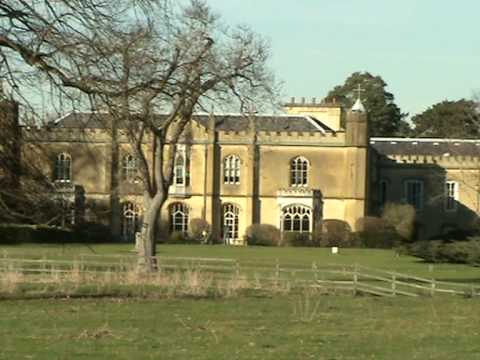
Missenden Abbey as it is today
A compromise solution was suggested, that the Bedfordshire priory should instead be governed by the Abbey of Great Missenden in Buckinghamshire (two days travelling away).  Harrold's prioress Gila undertook to gain the agreement of Arrouaise to this.  Details of this are recorded in the Great Missenden Cartulary (a collection of legal documents now in the British Library).  It was suggested that Harrold pay Arrouaise half a mark in rent to sweeten the arrangement.

Later, Abbot Walter of Arrouaise argued in the church courts that Missenden had obtained a forged charter from the Pope, and that any agreements made in respect of Harrold's changing status were null and void.  However, he maintains that Harrold should be subservient to Missenden.  Missenden, in turn, agreed to allow Harrold its independence in respect of a payment of half a mark - an agreement brokered by the bishop of Lincoln on 18 October 1188.

Thenceforth the Priory of Harrold came to be an independent house of nuns, living under the rule of St Augustine and answering to the Bishop of Lincoln.  The Augustinian rule was effectively no change for the nuns of Harrold - as Arrouasians they would have lived under it in any case.  The main change was that they were now effectively self-governed, something that would persist until the dissolution in the 16th century.

Some of the buildings of Great Missenden Abbey survive to this day: the site is currently owned by Buckingham New University and is run as a conference centre.


Sources:

The Cartulary of Missenden Abbey
Thompson, Sally (1991), Women religious: The founding of English nunneries after the Norman Conquest, Oxford: Clarendon Press

Venarde, Bruce L. (1997), Women's monasticism and medieval society: nunneries in France and England, 890-1215, Ithaca: Cornell University Press