Showing posts with label Missenden Abbey. Show all posts

Thursday, 14 August 2014

The break from Arrouaise: 1170-1188


Harrold Priory was originally founded as a 'daughter' house of the abbey of Arrouaise, near Calais in northern France.  From its foundation it appears to have been successful, attracting canons (priests), monks and nuns to its walls.  But a generation later its character had changed: Harrold appears now to be purely a nunnery with a prioress in charge, and it wanted its independence.  Following the death of Abbot Gervase the order had seemed to have lost control over its houses and was unsure of its direction.

The Arrouasian order resisted the call for autonomous houses but Harrold insisted that the distances involved made the control of their house from France impractical.  Other abbeys and nunneries in England in the 12th century argued the same, although many found little difficulty in being managed from a distance in this way.
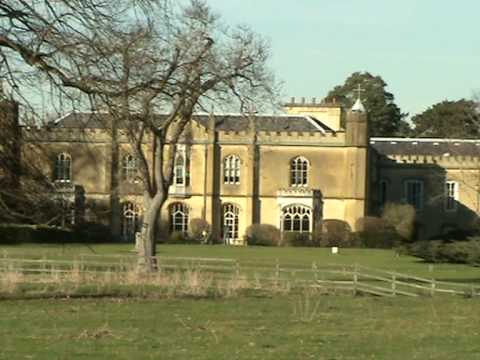
Missenden Abbey as it is today
A compromise solution was suggested, that the Bedfordshire priory should instead be governed by the Abbey of Great Missenden in Buckinghamshire (two days travelling away).  Harrold's prioress Gila undertook to gain the agreement of Arrouaise to this.  Details of this are recorded in the Great Missenden Cartulary (a collection of legal documents now in the British Library).  It was suggested that Harrold pay Arrouaise half a mark in rent to sweeten the arrangement.

Later, Abbot Walter of Arrouaise argued in the church courts that Missenden had obtained a forged charter from the Pope, and that any agreements made in respect of Harrold's changing status were null and void.  However, he maintains that Harrold should be subservient to Missenden.  Missenden, in turn, agreed to allow Harrold its independence in respect of a payment of half a mark - an agreement brokered by the bishop of Lincoln on 18 October 1188.

Thenceforth the Priory of Harrold came to be an independent house of nuns, living under the rule of St Augustine and answering to the Bishop of Lincoln.  The Augustinian rule was effectively no change for the nuns of Harrold - as Arrouasians they would have lived under it in any case.  The main change was that they were now effectively self-governed, something that would persist until the dissolution in the 16th century.

Some of the buildings of Great Missenden Abbey survive to this day: the site is currently owned by Buckingham New University and is run as a conference centre.


Sources:

The Cartulary of Missenden Abbey
Thompson, Sally (1991), Women religious: The founding of English nunneries after the Norman Conquest, Oxford: Clarendon Press

Venarde, Bruce L. (1997), Women's monasticism and medieval society: nunneries in France and England, 890-1215, Ithaca: Cornell University Press


Harrold families


The original founder of Harrold Priory was Samson Fortis.  The name is associated with nearby Turvey village, rather than Harrold.  However, it is suggested by historians that Fortis was only able to grant the churches of Harrold and Brayfield to the new priory through his wife, Albreda de Blosseville.

Harrold Hall, originally Harrold Priory,
with St Peter's church: source: www.harrold.info
Albreda was born in 1113 in Harrold and would have been around 23 years old when the grant was made.

 She would likely have inherited the lands in her own right from her father William de Blosseville (born 1080), the lord of Harrold manor.  He in turn had inherited the village from his father, Gilbert de Blosseville (b 1050), who as a young solider or knight had served with William the Conqueror and been granted the village of Harrold.

Fast forward to 1170 and in the dispute between Harrold Priory and the abbey of Arouaise, Robert de Braose solemnly declares that he had inherited Harrold church and had granted it to Arrouaise.  Robert's mother was Albreda de Blosseville.  Is it possible, then, that Samson Fortis (or Samson le Fort) had died, and his young widow had married Payn de Braose (b 1112)?  Their son then inherited the manor of Harrold through his mother, which he then confirmed on the burgeoning priory of Harrold?

Robert was born in Bradwell, which is now a district of Milton Keynes in 1140.  This would suggest that Samson's decision to endow the new priory of Harrold in 1136 may have been one of his last, and that he died shortly after.  Such an endowment close to death would have represented, to him at least, a sound investment in his afterlife.

The de Braose family connection was maintained with Harrold in later generations, though.  Robert's daughter, also called Albreda, married Ralph de Morin from Harrold.  The income from St Peter's in Harrold and from Brayfield was by this time confirmed on Harrold Priory.


Sources:

The Cartulary of Missenden Abbey
Thompson, Sally (1991), Women religious: The founding of English nunneries after the Norman Conquest, Oxford: Clarendon Press
The Domesday Book entry for Harrold
Venarde, Bruce L. (1997), Women's monasticism and medieval society: nunneries in France and England, 890-1215, Ithaca: Cornell University Press